The home and garden are dedicated to improving and beautifying living spaces inside and out. This niche contains home essentials, lawn care and landscaping advice, and gardening techniques. It aims to help individuals create attractive, functional, and personalized environments, enhancing their homes and outdoor areas. Whether maintaining a lush lawn, cultivating a garden, or embarking on a DIY project, this niche provides valuable insights and inspiration to elevate your living spaces.
How to Choose Plants for Different Light Conditions: A Simple Guide
Choose plants by matching their light needs to the amount of direct sun, indirect light, or shade your space receives each day. Check the light in the actual growing spot, then select plants that can thrive there rather than forcing them to adapt to the wrong conditions.
In American homes, light can vary a lot from one room to the next. A sunny kitchen window in Phoenix may receive intense afternoon rays, while a north-facing living room in Seattle may stay dim for much of the day. Outside, a garden bed in Florida can face strong summer sun, while a spot beneath mature trees in Ohio may remain cool and shaded.
The easiest way to choose healthy plants is to study your space before visiting a garden center or ordering seeds. Look at the direction your windows face, how long sunlight reaches each area, and whether trees, porches, curtains, or nearby buildings block the light. These details help you select plants that fit your home, patio, or yard.
Plant labels offer a useful starting point, but terms such as full sun, partial shade, and bright indirect light can be confusing. The right choice also depends on the plant species, local climate, season, and growing conditions. Once you learn how to read the light in your space, you can avoid many common plant-care problems and make better use of every sunny or shady corner.
Source: essentialindoorplants.com
Understand the Main Types of Plant Light
Plants use light to make sugars through photosynthesis. The amount and intensity of light they receive affect how well they grow, form leaves, develop roots, and produce flowers or fruit. Each species has a range of light conditions in which it grows best.
For plant selection, the most useful first step is to separate direct sunlight from indirect daylight and shade. These terms describe different growing conditions, not simply whether a room or garden looks bright to your eyes.
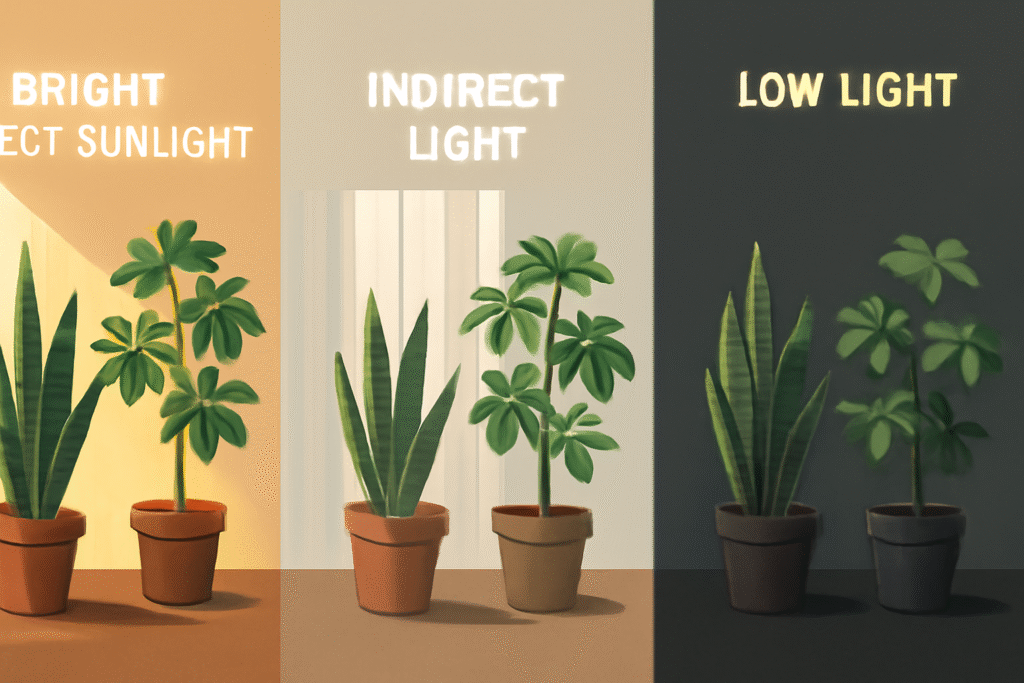
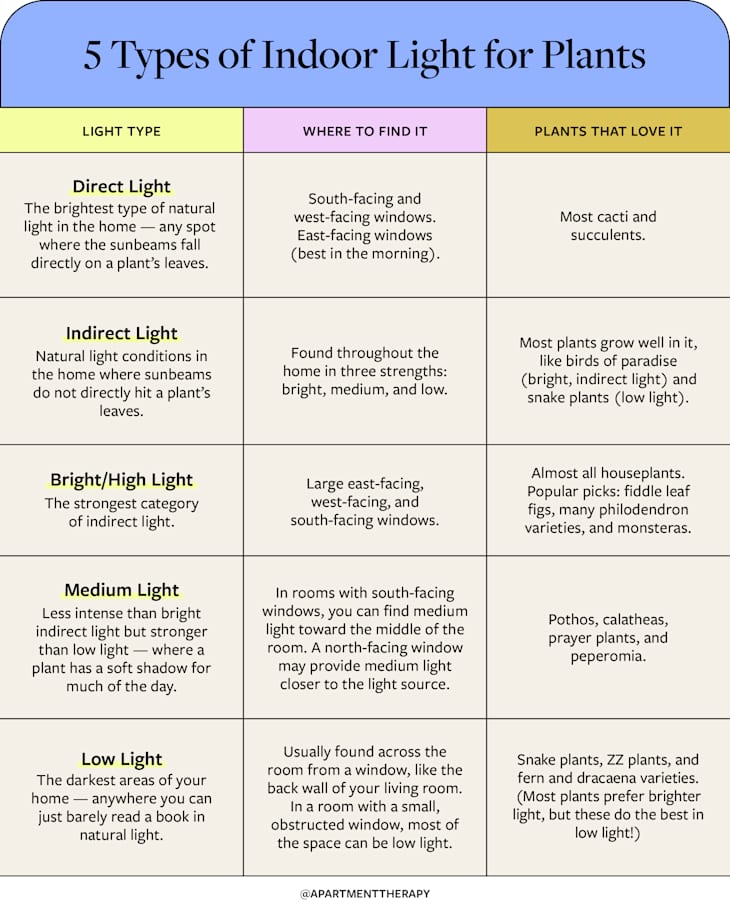
Outdoor plant labels often use full sun, partial sun, partial shade, and full shade. Indoor plant care usually uses terms such as direct light, bright indirect light, medium light, and low light. The categories overlap, but they are not exact equivalents because glass, room depth, weather, and artificial lighting change the light a plant receives.
Source: i.pinimg.com
Full sun
For most outdoor garden labels, full sun means at least six hours of direct sunlight each day. Some sun-loving plants tolerate or benefit from more, provided their temperature and water needs are met.
Partial sun
Partial sun generally means about four to six hours of direct sunlight. Morning sun is often easier on heat-sensitive plants than intense afternoon sun.
Partial shade
Partial shade often describes a location that receives about two to six hours of direct sun or dappled light for part of the day. Exact usage varies by plant label, so check the species-specific guidance.
Full shade
Full shade means little or no direct sun, although the area may still receive reflected or filtered daylight. Many shade plants need bright ambient light rather than a completely dark location.
Bright indirect light
This indoor condition provides strong daylight without prolonged direct sun hitting the foliage. It is common near an east-facing window or a few feet from a bright window, depending on the room.
Low light
Low light means a space receives limited usable daylight. Some foliage plants can survive there, but growth may be slow, and flowering or fruiting plants often perform poorly.
Why direct and indirect light are different
Direct sunlight reaches leaves without being significantly blocked by a roof, curtain, or other barrier. Indirect light reaches the plant after being scattered or reflected. A window can provide both conditions at different times of day.
A room may look bright to a person while providing too little light for a plant that needs strong sun. Human eyes adjust to a wide range of brightness, so visual comfort is not a reliable measure of plant light needs.
Look for sunbeams
If a clear beam of sunlight falls on the leaves, the plant is receiving direct sun at that moment.
Watch for soft, diffuse daylight
If the area is bright but the leaves are not in a direct sunbeam, the plant may be receiving indirect light.
How to Check the Light in Your Space
Before choosing plants, observe the exact spot where you want to grow them. Light changes with window direction, season, cloud cover, nearby buildings, tree canopies, and the distance between the plant and its light source.
Start by checking the area at different times of day. Note when direct sunlight appears, how long it lasts, and whether the sun reaches the leaves or only the floor nearby. Repeat the check on more than one day if weather conditions vary.
For outdoor beds, consider the growing season rather than relying on a single winter observation. Deciduous trees may allow much more sunlight through in early spring than in summer. A spot beside a house can also receive strong afternoon heat even when the morning area remains shaded.
Source: cdn.apartmenttherapy.info
Track sunlight for several days
Record the time direct sun begins and ends at the proposed growing location. Add the periods together to estimate the daily hours of direct sunlight.
Check the direction of your windows
In the United States, south-facing windows often receive strong light over much of the day, while north-facing windows usually receive less direct sun. East-facing windows commonly receive morning sun, and west-facing windows often receive stronger afternoon sun. Local surroundings and season can change these patterns.
Notice obstacles
Buildings, porches, insect screens, curtains, trees, and deep roof overhangs can reduce the amount of light that reaches a plant.
Check the distance from the window
Light levels often fall quickly as you move farther into a room. A plant beside the glass may receive much more usable light than one placed several feet away.
Use a light meter when needed
A suitable light meter or plant-light sensor can help compare locations. Smartphone apps can provide rough estimates, but their readings may not be accurate enough for precise plant-light decisions.
A simple light log for beginners
You do not need expensive equipment to begin. Use a notebook to record the location, time, weather, direct-sun periods, and any shade from nearby objects. After a few days, you will have a better picture of the conditions your plants will face.
For example, suppose a patio container receives direct sun from 8 a.m. until noon and then sits in shade. That gives it about four hours of direct sunlight. It may suit plants labeled for partial sun, but the best choice still depends on local heat, the plant species, and the intensity of that morning sun.
Record direct sun separately
Do not count every hour of bright daylight as an hour of direct sunlight.
Repeat after seasonal changes
Recheck the space when the sun's angle changes or trees develop new leaves.
Choose Plants for Full Sun
Choose full-sun plants for outdoor locations that receive at least six hours of direct sunlight on a typical growing-season day. Many vegetables, flowering annuals, herbs, and fruiting crops need this level of light to grow well and produce a useful harvest.
Sunlight is especially important for plants that form fruit or flowers. Tomatoes, peppers, cucumbers, squash, and many other garden crops often grow best in sunny areas, although individual cultivars and local conditions can affect performance. Some leafy crops can tolerate less sun, especially during hot weather.
Full sun does not mean every plant can handle intense heat or dry soil. In places such as Arizona, Texas, and parts of the Southeast, afternoon sun can be harsh during summer. A plant that thrives in a cooler northern garden may need afternoon shade in a hot southern climate.
Source: tu-bu.com
Vegetables
Tomatoes, peppers, cucumbers, squash, and many beans generally perform best with ample direct sun. Check the growing instructions for the specific crop and variety.
Herbs
Rosemary, thyme, oregano, and many types of basil prefer sunny growing sites. They still need suitable soil moisture and protection from extreme heat when required.
Flowers
Zinnias, sunflowers, many marigolds, and numerous sun-loving annuals need a sunny site for strong growth and flowering.
Outdoor shrubs
Some roses and many sun-loving flowering shrubs produce more blooms when they receive adequate direct sunlight. Verify the needs of the exact variety before planting.
How to handle strong indoor sunlight
Indoor plants near south- or west-facing windows may receive intense direct sun, especially in summer. Succulents and cacti adapted to high light may thrive there, while many tropical foliage plants prefer filtered or indirect light.
Move a plant into stronger light gradually if it has been growing in a dim spot. Sudden exposure to intense sun can scorch leaves, particularly when the plant has not had time to adjust. A sheer curtain can soften direct rays without blocking all daylight.
Check for sun scorch
Pale, tan, or brown dry patches on the sun-facing side of leaves may indicate sun damage, though pests and other problems can cause similar symptoms.
Balance light and water
Plants in strong light may use water faster, but watering should depend on soil moisture and the plant's needs rather than a fixed daily schedule.
Choose Plants for Partial Sun and Partial Shade
Partial-sun and partial-shade locations suit plants that need some direct sunlight but benefit from periods of protection. These conditions are common beside houses, along fences, under open tree canopies, and on patios that receive sun for only part of the day.
The distinction between partial sun and partial shade is not perfectly consistent across all plant labels. Many guides use partial sun for locations receiving roughly four to six hours of direct sun and partial shade for places receiving about two to six hours, often with protection from hot afternoon rays. Read the plant's own label and consider your local climate.
Morning sun followed by afternoon shade is often useful in hot regions because it gives plants light while limiting exposure during the warmest part of the day. In cooler regions, a plant that tolerates partial shade may still benefit from more sunlight to support flowering.
Source: voiceofplant.com
Leafy vegetables
Lettuce, spinach, and some other leafy crops can grow with less direct sun than fruiting vegetables. In warm climates, some afternoon shade can help reduce heat stress, though growth may slow in very dim conditions.
Flowering plants
Impatiens and begonias are common choices for partly shaded areas, although their exact light needs vary by species and cultivar.
Herbs
Parsley, mint, and cilantro may tolerate partial shade in suitable conditions. Mint spreads readily, so consider growing it in a container to keep it from taking over a garden bed.
Shrubs and perennials
Many hydrangeas, coral bells, and other shade-tolerant ornamentals can fit partly shaded beds. Flowering and foliage color depend on the species, variety, climate, and available light.
Choose plants based on the time of day
Two garden beds may each receive four hours of sun but still offer different growing conditions. One may receive gentle morning sun, while the other receives hot afternoon rays. The total number of hours is useful, but the timing and intensity also matter.
For a hot summer garden, try placing heat-sensitive plants where they receive morning light and afternoon protection. For a cooler garden with short growing seasons, a sunnier position may help plants grow and flower more reliably.
Morning sun
Often a useful fit for plants that need some direct light but struggle with strong afternoon heat.
Afternoon sun
Can be intense, especially near walls, paving, and reflective surfaces. Choose heat-tolerant plants or provide shade when the species requires it.
Choose Plants for Full Shade and Low Light
Choose shade-tolerant plants for areas that receive little direct sunlight. Outdoors, these places may sit beneath trees, beside north-facing walls, or under covered porches. Indoors, they may include rooms with small windows or spaces several feet from the nearest window.
Shade does not mean darkness. Outdoor shade plants still need usable daylight, and indoor plants need enough light to support photosynthesis. A room with no natural light may not support a living plant for long without a suitable artificial light source.
Full shade outdoors and low light indoors are different conditions. Outdoor shade can still provide substantial diffuse daylight, while a deep indoor corner may receive very little light. Choose plants for the actual conditions rather than assuming every plant labeled as shade-tolerant will thrive in any dim location.
Source: theindoornursery.com
Outdoor foliage plants
Hostas, ferns, and many varieties of heuchera can grow in shaded gardens, depending on the species and climate. Check their moisture and soil needs as well as their light requirements.
Shade flowers
Many impatiens and some begonias can add color to shaded beds or containers. Some varieties tolerate more sun than others, so use the plant label to guide placement.
Indoor foliage plants
Snake plants, ZZ plants, and some pothos varieties can tolerate lower indoor light than many other houseplants. They may grow slowly and can still decline if light is extremely limited.
Plants for bright shade
Peace lilies and many tropical foliage plants can adapt to bright, indirect light. They are not suited to every dark corner, and flowering may decrease when light is too low.
What to do when a room has very little daylight
If a room has no window or receives almost no natural daylight, use a suitable grow light or choose another location. Ordinary room lighting is usually designed for human vision, not for sustained plant growth.
A grow light can provide supplemental light for foliage plants, herbs, seedlings, and other indoor crops. The correct setup depends on the lamp's output, distance from the leaves, daily operating period, and the plant's needs. Follow the manufacturer's safety instructions and avoid letting lamps or electrical connections come into contact with water.
Choose a suitable grow light
Look for a light intended for plant growth and follow its guidance for distance and daily use. A timer can help maintain a consistent schedule.
Avoid nonstop lighting
Most plants benefit from a daily dark period. Do not assume that leaving a grow light on around the clock will improve growth.
Watch the plant's response
Adjust the light setup if growth becomes weak or stretched, or if leaves develop bleaching, curling, or heat damage.
Match Common Houseplants to Indoor Light Conditions
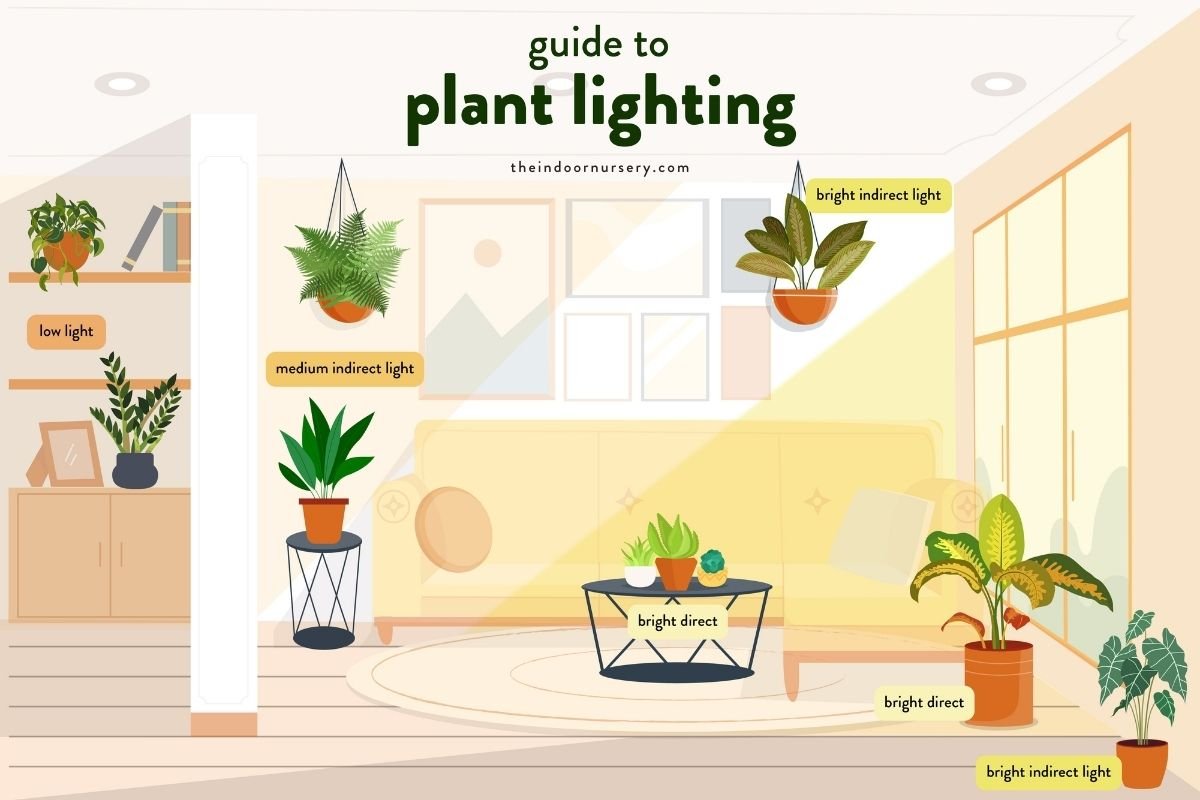
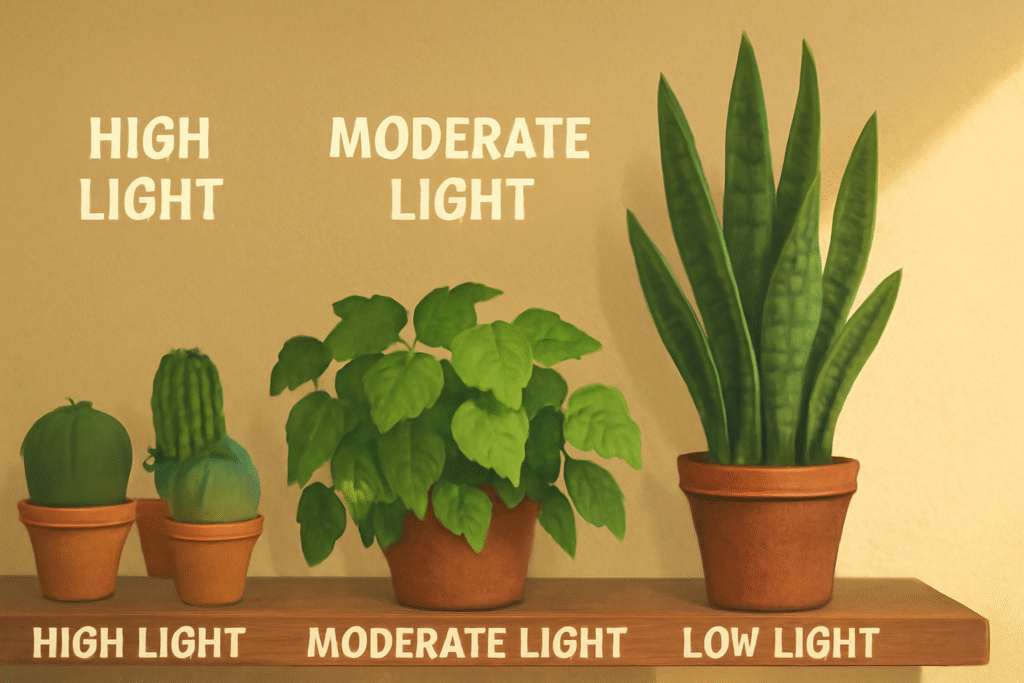
Indoor plant selection works best when you start with the brightest available locations and match each plant to the light it can use. A sunny windowsill, a bright room with filtered daylight, and a dim hallway offer different growing conditions even when they are part of the same home.
The suggestions below are general starting points, not fixed rules for every variety. Leaf color, plant age, local climate, window glass, and seasonal changes can all affect the result. Check care guidance for the exact plant you buy, then observe how it responds after placement.
Source: cdn.shopify.com
Bright direct light
Many cacti and sun-adapted succulents do well in bright windows when gradually acclimated. Some succulents need more protection from intense midday or afternoon heat.
Bright indirect light
Monstera, many philodendrons, and several tropical foliage plants can grow well in bright filtered daylight. Some varieties tolerate more or less sun than others.
Medium indirect light
Pothos, heartleaf philodendron, and some dracaena varieties can adapt to moderate indoor light. Growth may be slower than it would be in a brighter location.
Lower light
ZZ plants and snake plants often tolerate lower light than sun-loving houseplants. Their ability to survive in dimmer conditions does not mean they can grow well without light.
Flowering houseplants
Many flowering plants need more light than foliage plants. If a plant stays healthy but rarely flowers, insufficient light may be one cause, though temperature, nutrition, and season can also affect blooming.
A practical indoor light comparison
Use this table to narrow down your options before you buy. It summarizes common plant choices and the conditions they may tolerate, but it does not replace care instructions for a particular species or cultivar.
Sunny windowsill
Consider suitable succulents, cacti, or sun-loving herbs. Check for excessive heat through glass and introduce plants to stronger sun gradually.
Bright room away from direct rays
Consider Monstera, many philodendrons, and other tropical foliage plants that prefer filtered daylight.
Moderately bright corner
Consider pothos, heartleaf philodendron, or dracaena, while checking whether the exact variety needs brighter conditions.
Dim room with some daylight
Consider a snake plant or ZZ plant, but expect slower growth and monitor the plant for signs of decline.
Choose Outdoor Plants for Shade, Sun, and Changing Seasons
Outdoor plant choices need to account for both sunlight and the local climate. A plant that thrives in a shaded garden in Maine may need more protection from heat in Georgia, while a sun-loving perennial in the Pacific Northwest may face very different conditions from the same plant in the Southwest.
USDA plant hardiness zones describe average annual extreme minimum winter temperatures. They help gardeners judge whether many perennial plants can survive winter in a location, but they do not tell you how much sun a plant needs or how well it will tolerate summer heat.
When choosing outdoor plants, check the plant label for light requirements and compare those needs with the actual garden site. Then consider local temperature, rainfall, soil drainage, and the plant's mature size. A good match accounts for more than sunlight alone.
Source: cdn.shopify.com
Hot and sunny yards
Look for plants suited to full sun and local summer temperatures. Drought-tolerant plants may be useful in dry climates, but they still need appropriate care while establishing.
Cooler northern gardens
Use the local growing season and sunlight pattern to choose vegetables, annuals, perennials, and shrubs. Full sun may help some plants receive enough light during shorter summer days.
Humid southern gardens
Consider heat, humidity, airflow, and disease pressure along with sunlight. Some plants benefit from morning sun and afternoon shade in the hottest months.
Wooded yards
Choose plants adapted to shade and the moisture levels under trees. Tree roots may compete with new plants for water and nutrients, so light is only one part of the challenge.
Patios and balconies
Observe the sun's path, reflected heat from walls, and wind exposure. Containers can dry quickly in direct sun, even when plants receive the correct amount of light.
Account for seasonal changes
A garden bed may receive more direct sun in early spring than it does in summer if nearby trees leaf out. The reverse can happen when the sun's angle changes and begins reaching a space that was shaded earlier in the year.
Before planting a permanent shrub or perennial, consider the site's likely light conditions during the main growing season. For containers, it is easier to move plants as the seasons change, but make each move gradually when the new location is much brighter.
Observe deciduous trees
Check how much shade the canopy creates once leaves are fully developed.
Watch nearby structures
Buildings, fences, and rooflines can create long shadows at certain times of year.
Plan for mature growth
A small tree or shrub may eventually shade plants that currently receive full sun.
Recognize Signs That a Plant Gets Too Much or Too Little Light
A plant's growth can reveal whether its location suits its light needs. Weak growth, stretched stems, poor flowering, or leaf scorch can signal a problem, but none of these symptoms proves that light is the cause. Water, pests, root health, nutrition, and temperature can produce similar signs.
Start with the simplest checks. Compare the plant's current conditions with its care requirements, examine the leaves and stems, and check soil moisture. Change one major factor at a time when possible so you can tell whether the adjustment helps.
Source: cdn.farmingaide.com
Long, weak stems
Plants may stretch toward a light source when they do not receive enough usable light. Move the plant to a brighter suitable location or improve its grow-light setup gradually.
Small new leaves
New growth may remain small when light is inadequate, but root problems, pests, and nutrient issues can also limit leaf size.
Fewer flowers or fruits
Many flowering and fruiting plants need adequate light to produce well. Confirm the plant's seasonal needs and check temperature, pollination, watering, and nutrition before deciding that light is the only problem.
Bleached or scorched leaves
Sudden exposure to strong sunlight can damage leaves that developed in lower light. Move the plant out of harsh direct sun temporarily and increase exposure more slowly if its long-term needs call for more light.
Yellowing leaves
Yellow leaves can occur with both inadequate light and other problems, including overwatering, underwatering, nutrient shortages, or natural aging. Check the full set of growing conditions before making a change.
A step-by-step troubleshooting method
First, identify the plant as accurately as possible and read its light requirements. Next, measure or observe the light in its current location during the hours when it normally receives daylight. Compare those conditions with the plant's needs rather than moving it based only on a single damaged leaf.
If the plant needs more light, move it in stages toward a brighter spot or add suitable supplemental lighting. If it appears sun-damaged, reduce intense direct exposure and let it recover before increasing light again. Allow time for new growth to show whether the change is working.
Check the soil
Feel the soil and review drainage. Soil that stays wet too long can damage roots and cause symptoms that resemble poor light.
Inspect for pests
Look beneath leaves and along stems for insects, webbing, sticky residue, or other signs of infestation.
Make gradual changes
Avoid moving a plant from deep shade into intense midday sun in one step. Gradual adjustment reduces the risk of leaf damage.
Judge new growth
Look for stronger stems, healthy new leaves, and improved flowering when appropriate. Existing damaged leaves may not return to their original appearance.
Avoid Common Mistakes When Choosing Plants
The most common mistake is buying a plant because it looks attractive without checking whether the available light suits it. A plant may look healthy at the store because it has been grown under carefully managed conditions, yet struggle in a dim room or exposed patio.
Another mistake is treating a light category as a guarantee. A plant labeled for partial shade may tolerate a range of conditions, but it still needs enough light to grow. Likewise, a full-sun plant may suffer in extreme heat even when it receives plenty of sunlight.
Avoid trying to fix every plant problem with more light or more water. A plant that is struggling may need better drainage, less direct sun, improved airflow, or a change in watering. Diagnose the likely cause before making several changes at once.
Source: essentialindoorplants.com
Mistake: judging by room brightness alone
A room that feels bright to people may still have weak light for plants. Observe direct sunlight and consider the plant's distance from the window.
Mistake: assuming shade means darkness
Most shade plants still need usable daylight. Use supplemental grow lighting when natural light is too limited.
Mistake: ignoring the season
Light patterns change as the sun moves and trees grow leaves. Recheck growing spots when conditions shift.
Mistake: changing light too quickly
Plants may suffer when moved suddenly between very different light levels. Increase or reduce exposure in stages when practical.
Mistake: forgetting water needs
Strong light can increase water use, while lower light often slows growth and water uptake. Check soil moisture before watering instead of following a rigid schedule.
Mistake: ignoring the plant label
Common names can refer to different species or cultivars with different needs. Use the botanical name and specific growing guidance whenever possible.
Know when a plant may not suit the space
If a plant repeatedly develops weak growth, fails to flower, or declines despite appropriate watering and healthy roots, the available light may be a poor match. Consider moving it to a more suitable spot or choosing a species that fits the space better.
For a permanent garden, it is often easier to choose a plant that naturally suits the site than to keep changing the environment. Shade-tolerant ground covers can be more practical beneath trees than sun-loving flowers that need constant attention.
Move the plant
Try a location that better matches the plant's light needs and monitor new growth.
Choose a better match
Replace a struggling plant with one suited to the available light, temperature, and moisture.
Frequently Asked Questions
Q
How many hours of sunlight do most garden plants need?
Many full-sun garden plants need at least six hours of direct sunlight each day. Partial-sun plants often grow with about four to six hours, while some shade-tolerant plants perform well with less. These ranges are general guides, so check the requirements of the specific species or variety.
Q
Can plants grow in a room without windows?
Plants generally cannot thrive long term in a room with no usable daylight unless they receive suitable artificial plant lighting. Ordinary ceiling lights may not provide enough light for sustained growth. Choose a grow light designed for plants and follow its guidance for distance, duration, and safe use.
Q
Which direction-facing window is best for indoor plants?
There is no single best window for every plant. South-facing windows in the United States often receive strong light, east-facing windows usually provide gentler morning sun, west-facing windows can receive intense afternoon sun, and north-facing windows generally offer less direct sunlight. Match the window to the plant's needs and account for local climate, trees, buildings, and the season.
Q
How can I tell if my plant is getting too little light?
Common signs include stretched stems, slow or weak growth, smaller new leaves, and fewer flowers. These symptoms can also result from root problems, pests, or poor watering, so check the full growing conditions before changing the light. Healthy new growth after a careful move to a brighter location can help show whether the adjustment is working.
Q
Can I grow vegetables in partial shade?
Yes. Leafy crops such as lettuce and spinach often tolerate partial shade better than fruiting crops such as tomatoes, peppers, and cucumbers. Some shade can help leafy vegetables cope with hot weather, but too little light may still slow growth and reduce yields. Choose crops based on the number of direct-sun hours and your local growing season.
Q
Do low-light houseplants need watering less often?
Often, yes, because lower light can slow growth and reduce water use. However, watering needs also depend on the species, pot size, soil mix, temperature, humidity, and drainage. Check the soil before watering, and never keep a plant constantly wet simply because it sits in a dim location.
Q
Should I move a plant immediately if its leaves turn brown?
Not always. Brown leaves may result from strong sunlight, dry soil, overwatering, fertilizer injury, pests, or other stress. Check where the damage appears, examine the soil and foliage, and compare the plant's current conditions with its care needs. If harsh sunlight is the likely cause, reduce exposure and make future changes gradually.
✦ Wrapping Up
Conclusion
Choosing plants for different light conditions starts with understanding the space you have. Track direct sunlight, notice how light changes during the day, and account for windows, trees, buildings, and seasonal shifts. Then match those conditions to the needs of the plant rather than choosing by appearance alone.
Full-sun vegetables and flowers need ample direct light, many plants suit partial sun or shade, and some houseplants tolerate lower indoor light. Every category has limits, and a plant's response also depends on water, temperature, soil, and its stage of growth. Watch new growth after planting and adjust the location or care when needed.
💡 Key Takeaway
Before buying your next plant, observe its intended location for several days, record the hours of direct sun, and compare the results with the plant's label. Choose a plant that fits the light you can provide, then monitor its new growth and adjust care as the seasons change.






No comments:
Post a Comment